A Reference Guide

The World of
Islamic Tiles

Twelve centuries of ceramic mastery, from ninth-century Iraq to the Ottoman ateliers of Iznik. A guide to traditions, techniques and what to look for.

One craft.
Many schools.

Islamic tilework is one of the most refined decorative traditions in world architecture. Across roughly twelve centuries, Muslim craftsmen turned the surfaces of mosques, palaces, madrasas and tombs into vast geometric and floral compositions in glazed ceramic. What unites them is not a single technique but a shared vocabulary of pattern, colour and intention.

This guide begins with Iznik, the most celebrated tradition, then surveys the other major schools, the techniques behind the tiles, and what to look for when buying. It is written for the South African context, with notes on installation and climate where relevant.

The Great Schools

Where the traditions come from

Turkey

Iznik

1480 to 1700

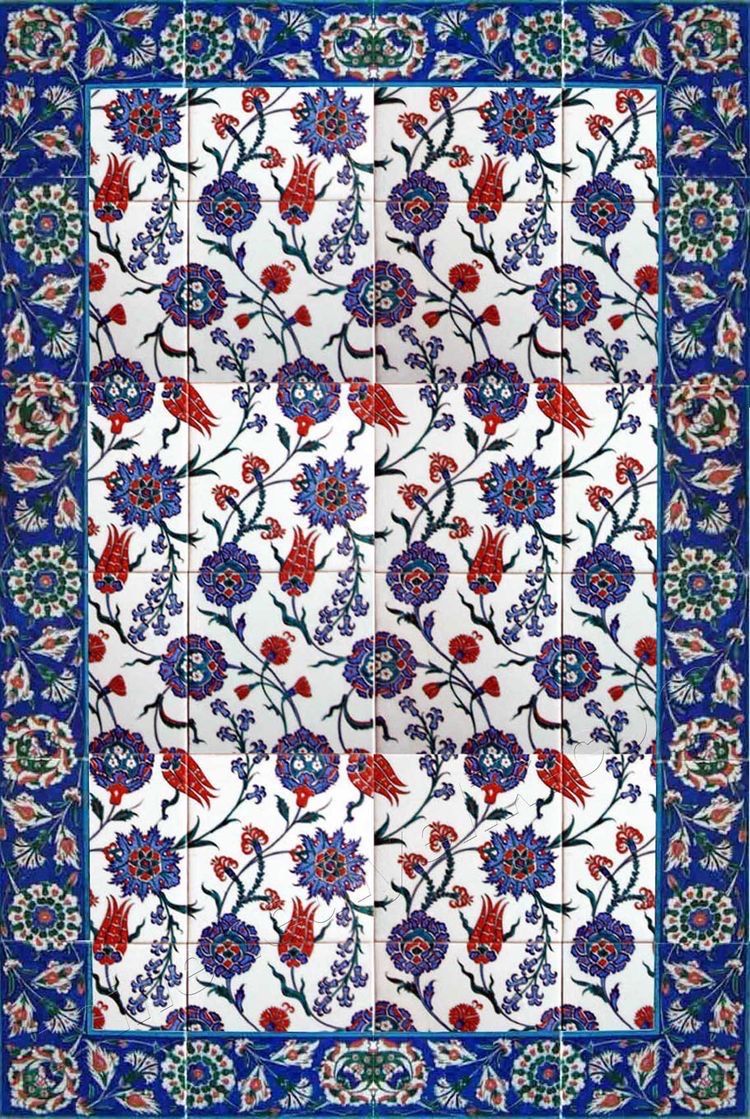
Iznik tiles take their name from the lakeside town of Iznik in north-western Anatolia, which became the principal ceramic centre of the Ottoman Empire from the late fifteenth century. Production reached its peak between 1560 and 1600, during the reigns of Suleyman the Magnificent and his successors, and its output covered the walls of imperial mosques, royal pavilions and harem chambers.

What makes Iznik distinctive is its true fritware body: quartz, fine clay and ground glass frit fired to a brilliant white, far harder and purer than the red earthenware used elsewhere. Over this body the potters painted directly onto a white slip, then sealed everything under a transparent glaze. The colours, cobalt blue, turquoise, emerald green and the famous raised tomato-red introduced around 1555, read with exceptional clarity against the white ground.

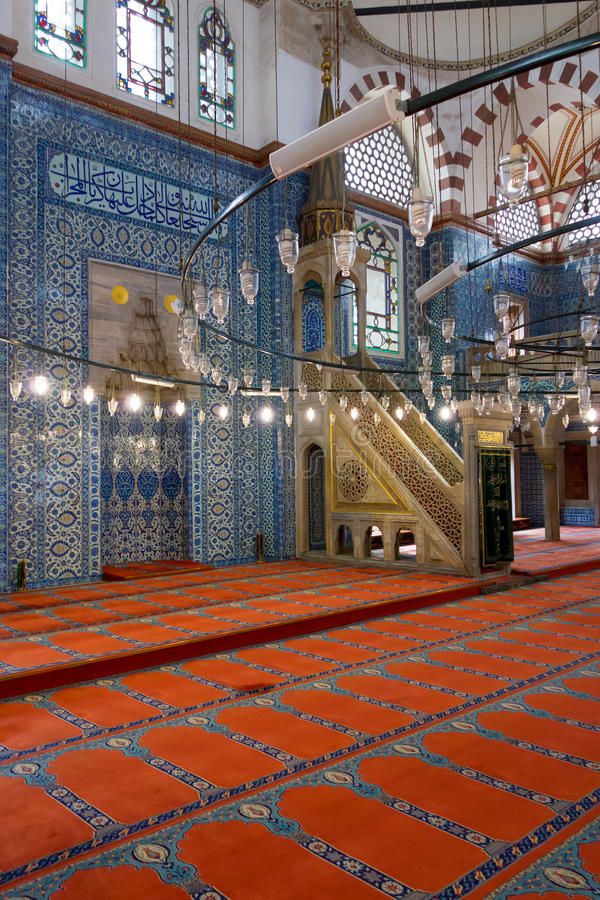
The design vocabulary is largely floral and rhythmic: saz leaves, tulips, carnations, hyacinths, roses and pomegranates interwoven with arabesques and cloud-band scrolls. The Rustem Pasha Mosque in Istanbul, built by the architect Sinan, is the most lavishly tiled interior in the Ottoman world. Today high-quality revival pieces are made both in Iznik and in Kutahya, which remains the largest contemporary source.
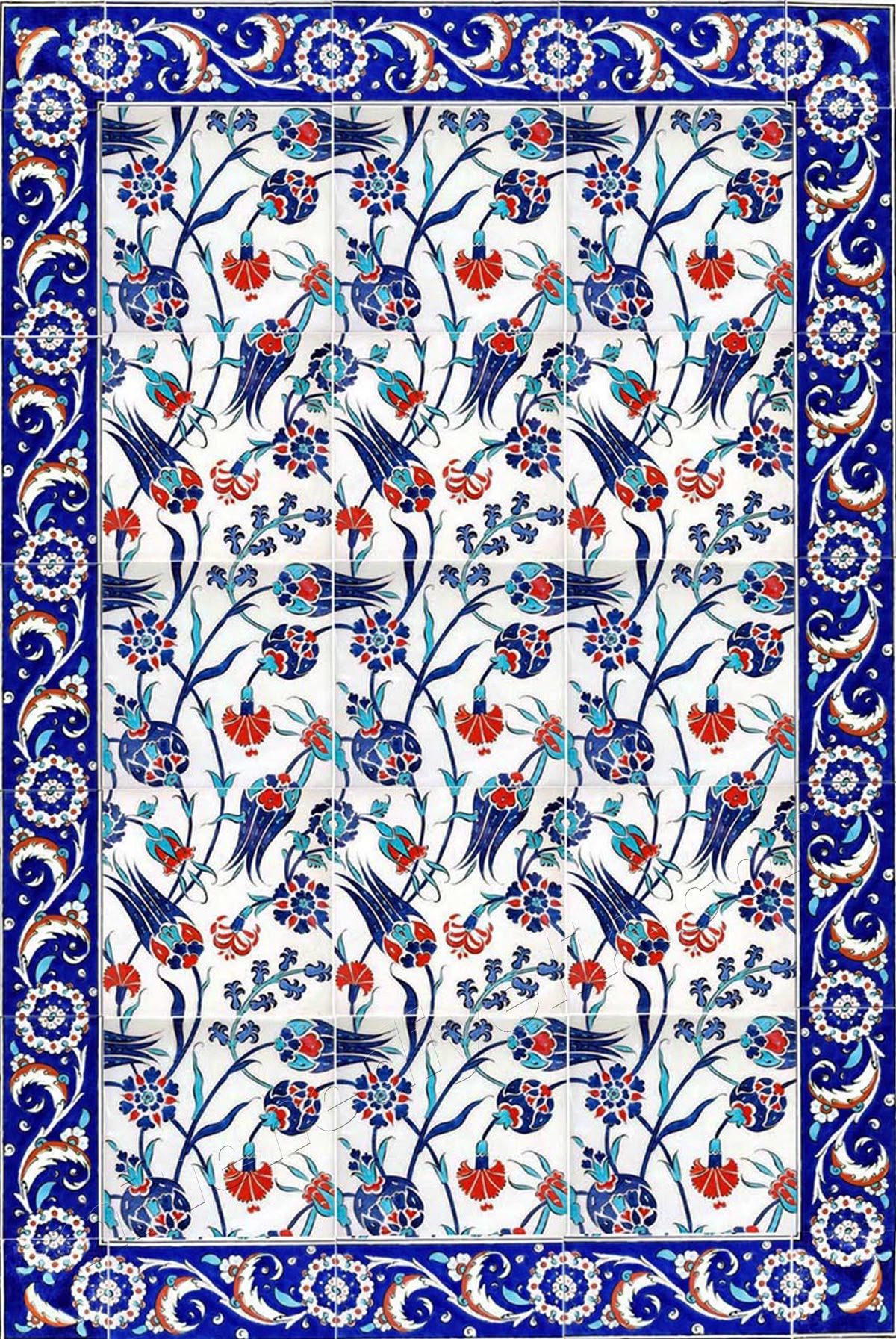

Fritware body Underglaze painting Raised red Floral motifs
Iznik tiles Iznik tiles Iznik tiles Iznik tiles Iznik tiles
Morocco

Zellige

Medieval to present

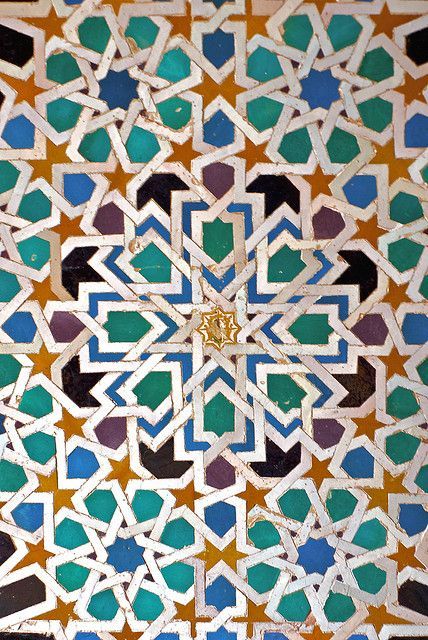
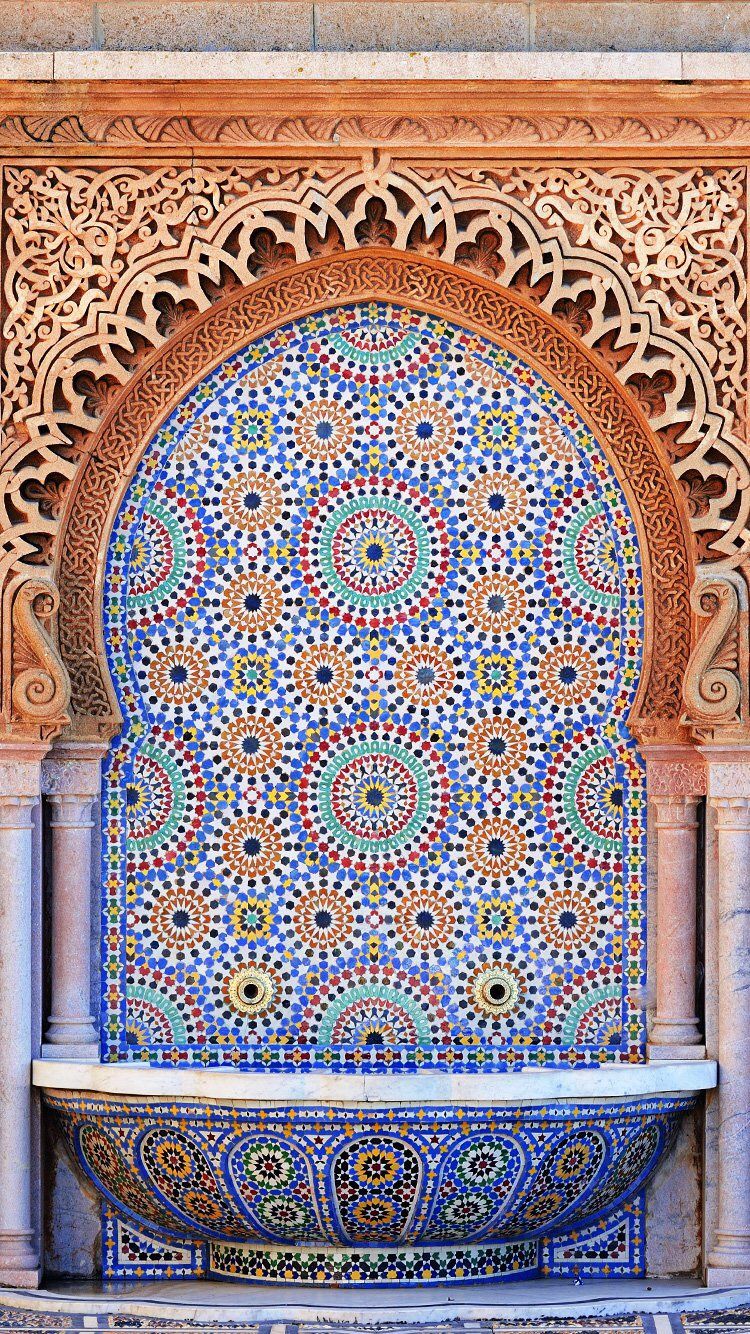
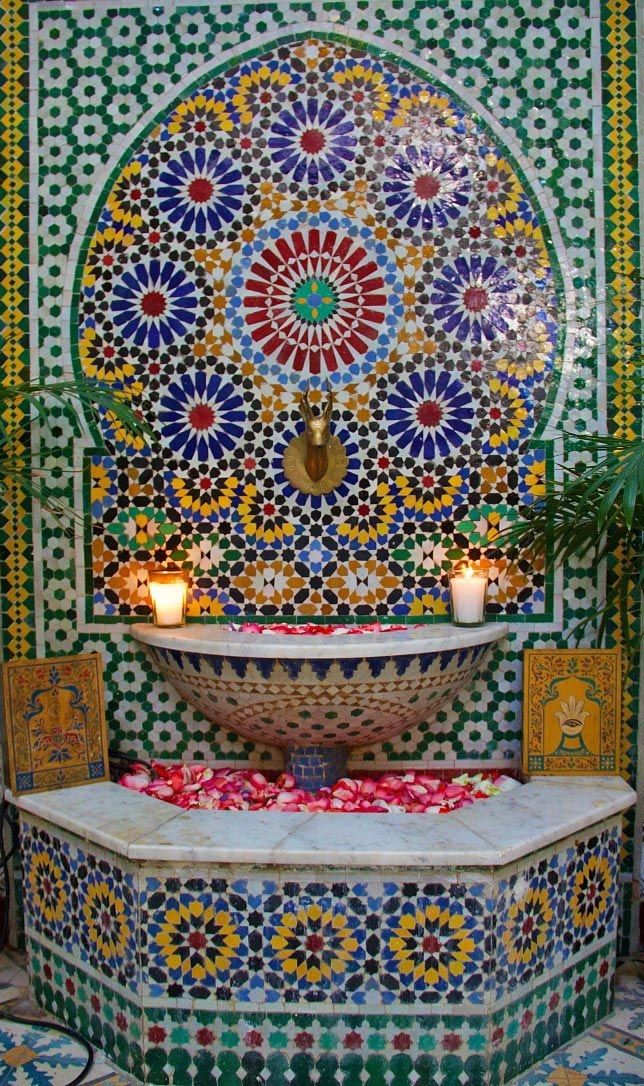
Zellige is the hand-cut, hand-laid geometric tile mosaic of Morocco. Although the tradition is shared with Islamic Spain, it survived in unbroken form in the medieval cities of Fez, Meknes and Marrakesh, where it is still made by hand today. The process begins with squares of natural clay, typically the grey clay of Fez, glazed in a single colour and fired. A master craftsman then chips each tile by hand with a sharp hammer into precisely shaped geometric pieces, which are laid face down, backed with mortar, and lifted as a finished panel.

The defining quality of authentic zellige is irregularity: every piece is slightly different in size, the glaze pools and pits, and no two panels are identical. The historical palette began with white, then expanded to honey-yellow, blue, green and a deep manganese black-brown. The Alhambra in Granada, the Madrasa Bou Inania in Fez and the Bahia Palace in Marrakesh are the great monuments of the tradition.

Customers should know that the term zellige is now used loosely. True zellige is hand-cut. Machine-cut tiles in geometric patterns are sometimes sold under the same name but lack the surface variation that is the essence of the style.
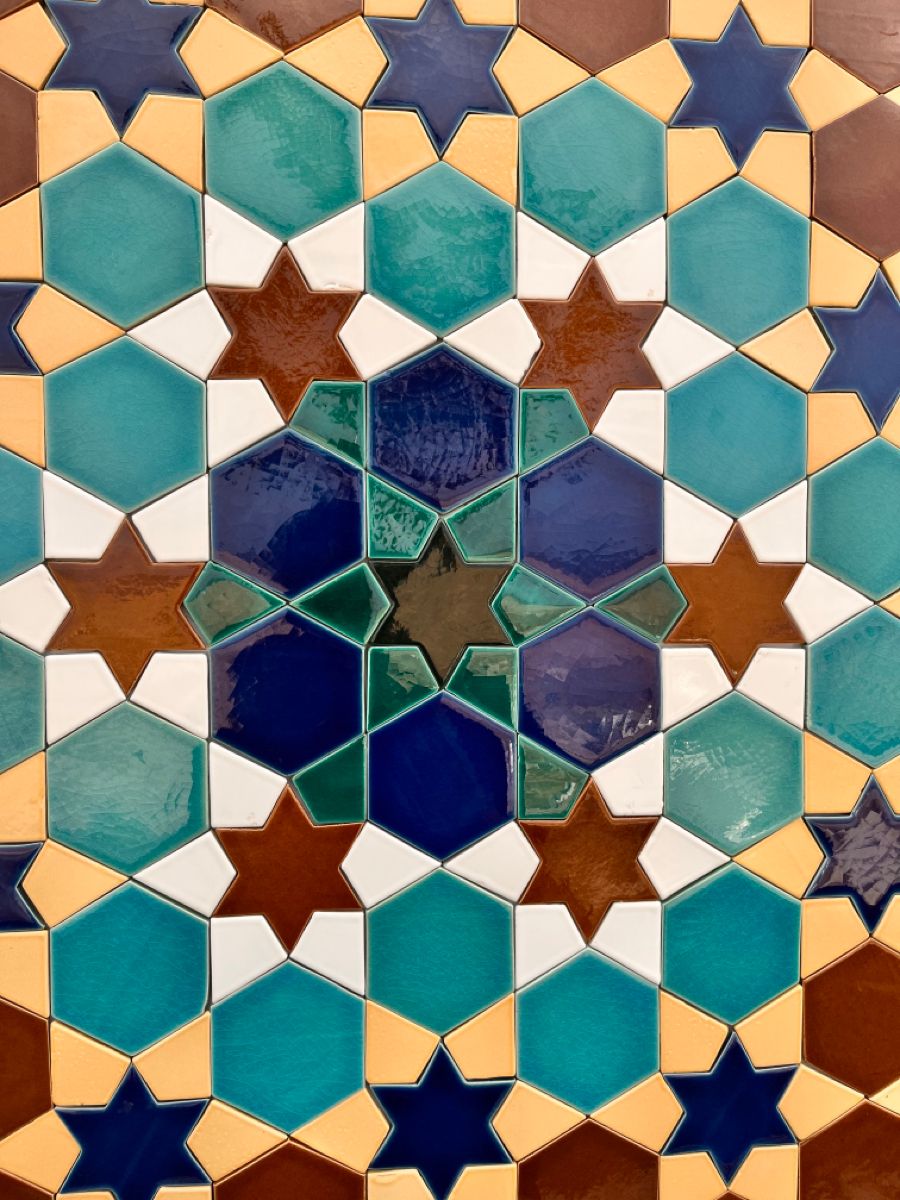
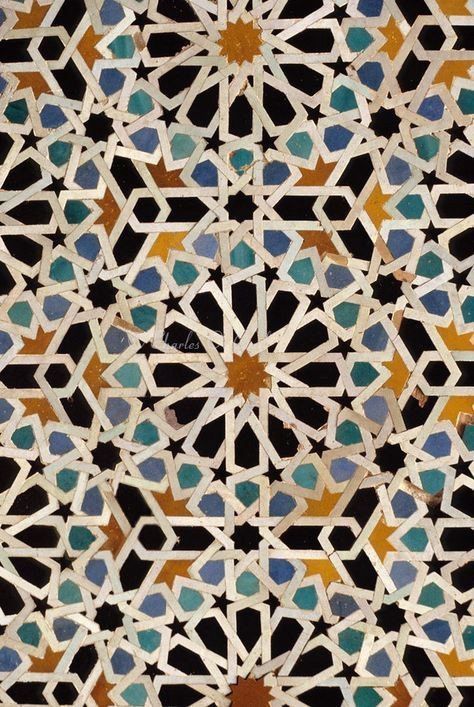
Hand-cut mosaic Geometric patterns Single-colour glazes
Zellige tiles Zellige tiles Zellige tiles Zellige tiles Zellige tiles
Turkey

Kutahya

1700 to present

Kutahya in western Anatolia took over from Iznik as the principal Ottoman tile centre after about 1700 and has produced continuously ever since. Kutahya work in its great period tends to be lighter, more open in design and slightly more pastel than Iznik, and Armenian potters there developed a distinct repertoire of Christian liturgical tiles alongside Islamic patterns.

Today Kutahya is the largest producer of Iznik-style tiles on the world market, and most contemporary Turkish tiles a South African buyer is likely to encounter will originate there. Quality varies widely, from machine-printed transfers to serious hand-painted studio work: the markers of quality are the same as for historical Iznik, a true white body, clean glaze and brushwork that shows the hand.
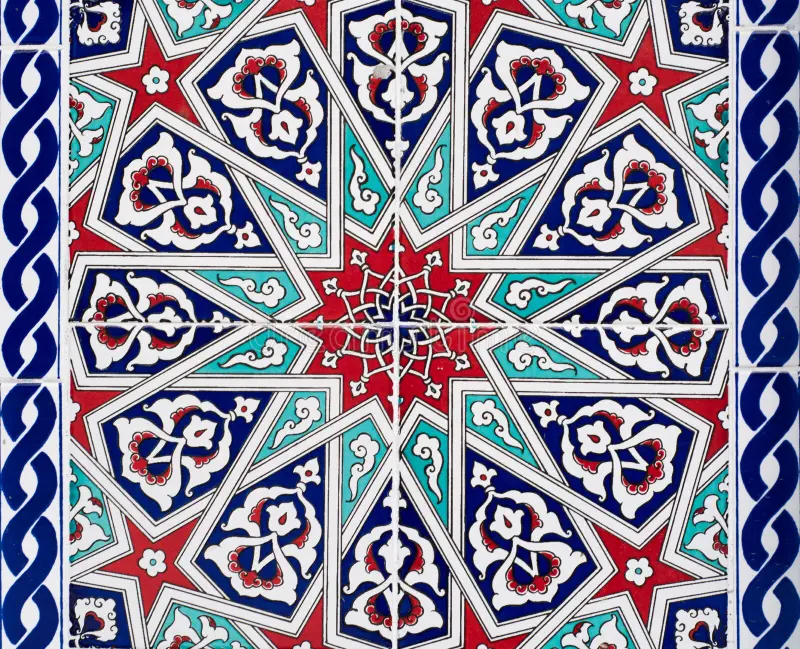
Contemporary production Iznik-style Multiple price points
Kutahya tiles
Spain / N. Africa

Hispano-Moresque

14th century onward

Tile traditions developed in Muslim Spain run in parallel with those of Morocco. The Alhambra in Granada is the supreme surviving example of Nasrid zellige. After 1492, Christian Spain inherited and adapted the techniques, producing two specifically Spanish refinements: cuerda seca, the dry-line technique in which a manganese-and-grease line prevents coloured glazes from running, and cuenca, in which the tile is pressed in a mould so that low ridges separate colour fields, producing a slightly three-dimensional surface that catches the light.

Hispano-Moresque lustreware from Manises and Valencia continued the Persian lustre tradition into the Renaissance and exported across Europe. Today Seville and Granada remain active centres for cuenca and cuerda seca production, and their output is among the most architecturally authentic available for traditional interiors.

Cuerda seca Cuenca Lustre
Damascus / Cairo

Mamluk & Damascus

13th to 17th century

Cairo and Damascus were major Islamic ceramic centres in the Mamluk and early Ottoman periods. Damascus tiles of the sixteenth and seventeenth centuries are often confused with Iznik because the technique is the same: fritware, underglaze painting, transparent glaze. The distinction lies in the palette and the drawing. Damascus work favours cobalt, turquoise and a soft sage green or aubergine purple, and crucially lacks the raised tomato-red of Iznik. The motifs tend toward architectural compositions: ogival lattices, large cypresses, measured arabesques rather than the exuberant naturalism of Iznik floral work.

Fritware Underglaze No raised red
Pakistan

Multani & Sindhi

Medieval to present

In the Indus valley, the towns of Multan and Hala have produced a distinctive blue and turquoise glazed tilework since the medieval period, used to clad the great Sufi shrines of Sindh and southern Punjab. The palette is narrower than the Ottoman tradition, essentially cobalt, turquoise and white, but the patterns are bold and the surfaces unusually deep in colour. Seldom seen on the Western market, they are worth knowing about for buyers with a regional or spiritual interest in South Asian Islamic architecture.

Cobalt and turquoise Sufi shrines South Asian
How They Are Made

Six techniques that define Islamic tilework

01

Underglaze Painting

The signature technique of Iznik and Damascus. Pigments are painted directly onto a white slip over the bisque-fired body, then sealed beneath a transparent glaze and fired once at high temperature. The decoration sits permanently beneath the glaze, protected indefinitely. Allows fine brushwork but limits colours to those that survive high heat.

02

Cuerda Seca

Developed in fourteenth-century Spain and adopted throughout the Islamic world. A line of manganese oxide mixed with a greasy substance is drawn between colour fields. During firing the grease burns away and the manganese leaves a fine matte dark line that keeps coloured glazes apart. The result is a multicolour tile with crisp boundaries, made faster than mosaic.

03

Cuenca

A Spanish refinement of cuerda seca. Instead of a drawn line, the tile is pressed in a mould so the design appears as low clay ridges. The ridges hold the coloured glazes apart in firing without any manganese line. Cuenca tiles have a slightly three-dimensional surface that catches raking light beautifully.

04

Lustre

The most technically demanding technique in the Islamic ceramic tradition. After a tile is fully glazed and fired, oxides of silver and copper are painted on and fired again in a reduction kiln. The metal oxides become a microscopically thin metallic film fused to the glaze, producing the characteristic golden or coppery iridescence that flashes only at certain angles. Originating in ninth-century Iraq.

05

Mosaic Faience

The most labour-intensive technique. Single-colour glazed tiles are hand-cut into small geometric or vegetal pieces and assembled on the wall to form the pattern. Because each piece is one solid colour, boundaries between colours are absolutely sharp. This is the technique behind Timurid domes, Safavid mihrabs and Moroccan zellige.

06

Overglaze Enamel

Both mina'i and lajvardina apply colour over an already-fired glaze and fix it in a second, lower-temperature firing. Mina'i, used in twelfth and thirteenth-century Persia, allowed fine pictorial work and an expanded palette including red and gold. Lajvardina applied red, white and gold leaf over cobalt or turquoise for a jewel-like effect.

Buying Guide

How to identify quality

The body

A serious Iznik or Iznik-revival tile has a true white quartz body. Look for no red terracotta showing through chips at corners or edges. Mass-produced tiles often use a red earthenware body with a white slip coating that will reveal itself at any damage point.

The red

Authentic Iznik red sits slightly raised above the tile surface. This is the iron-rich slip, sometimes called Armenian bole or sealing-wax red. Transfer-print tiles show a perfectly flat red that is uniform in tone. Hand-painted red shows slight variation in height and colour under raking light.

The brushwork

Under raking light, hand-painted brushwork shows fine variations in line weight, slight thickening at turns and the occasional lifted edge where the brush left the surface. Transfer prints are perfectly uniform. Both are legitimate at different price points but should be described accurately.

The glaze

On new pieces, look for a crisp transparent glaze without crazing. Some crazing on older or antique pieces is expected and adds character. On reproductions, heavy crazing on new tiles indicates a mismatch between body and glaze that will worsen over time.

The motifs

Quality Iznik-style work respects the historical vocabulary: saz leaves, tulips, carnations, hyacinths, arabesques and cloud-band scrolls. Tiles that mix Iznik motifs with unrelated patterns from other traditions, or with contemporary decorative elements, are not authentic reproductions regardless of the body quality.

Zellige: what to look for

True zellige is hand-cut. Every piece will be slightly different in size, and the glaze will pool and pit at edges. Machine-cut geometric tiles sold as zellige have perfectly uniform edges and a consistent glaze surface. Both are beautiful but they are different things.

South Africa

Notes for the local market

Cape coastal installations

The Cape's wet winters and salt-laden coastal air make vitrified bodies and well-sealed grout joints essential for any exterior or pool-side work. Standard Iznik-style wall tiles should be reserved for interior use along the coast. Zellige performs well on interior walls and lightly trafficked floors in this climate.

Highveld frost

The Highveld experiences regular winter frost. Low-fired terracotta zellige used on exterior floors or unprotected exterior walls in Johannesburg, Pretoria or the eastern Free State will eventually spall. Customers in those regions should use vitrified alternatives or sheltered placements such as under verandas or in internal courtyards.

Light

South African daylight is very bright. Iznik blues and turquoises read beautifully under it, but heavily white-grounded panels can appear bleached at midday in north-facing rooms. Customers planning feature walls or splashbacks should view samples in the actual installation light before committing to a large order.

Kitchen splashbacks

Iznik-style and zellige are both popular for kitchen splashbacks. Zellige especially suits Cape Dutch and farmhouse interiors. Panel-format Iznik tiles work well behind a range or as a vanity back in bathrooms. Fireplace surrounds with a single decorative panel framed in stone or timber are a natural choice for period homes.

Fountains and water features

Traditional zellige in the Moroccan riad style works beautifully in courtyard fountains and water features, provided the installation is sheltered from frost. Patterned Iznik or cuenca tiles as accents on stair risers against plain stone or timber stairs are another elegant application suited to the South African interior.

Mosques and prayer spaces

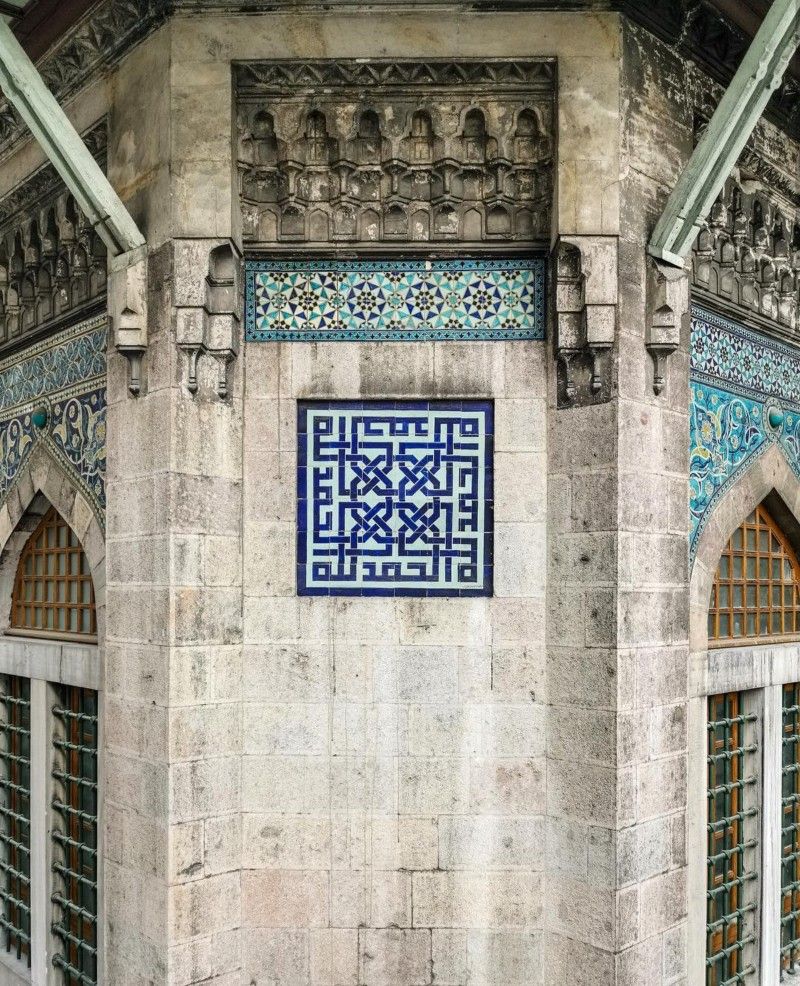
We work regularly with mosque committees and Islamic institutions on feature walls, qibla walls, mihrab surrounds and entrance foyers. These spaces reward the most formal Iznik or zellige work, and we can advise on scale, geometry and the correct positioning of calligraphic panels within the space.

Glossary

Key terms explained

Term Meaning
Banna'iArchitectural brick-tile patterning using glazed and unglazed bricks together, typical of Timurid Central Asia.
BejmatSmall rectangular hand-glazed Moroccan terracotta floor tiles.
CuencaSpanish technique: low ridges pressed into the tile separate coloured glazes during firing.
Cuerda secaDry-cord technique: a manganese-and-grease line keeps coloured glazes apart in firing, leaving a fine dark outline.
FritwareStonepaste body of quartz, fine clay and glass frit. The white-firing body characteristic of Iznik and most Ottoman tiles.
Haft rangPersian for seven colours. Cuerda seca tiles of the Safavid period, used to clad mosques and palaces rapidly.
LajvardinaMongol-period Persian overglaze technique combining a cobalt or turquoise ground with red, white and gold leaf.
LustreMetallic-film decoration produced by reduction firing of silver and copper oxides over an already-fired glaze.
MaâlemMoroccan master craftsman. The title of a senior zellige cutter who holds the pattern in memory.
Mina'iLate-12th to early-13th-century Persian polychrome overglaze enamel ware allowing fine pictorial work.
Mosaic faienceTile decoration in which single-colour tiles are cut and assembled jigsaw-fashion to form the pattern.
Saz leafLong, serrated, scimitar-shaped leaf. Central to Iznik design vocabulary.
UnderglazeDecoration painted directly on the tile body and sealed beneath a transparent glaze before the final firing.
ZelligeMoroccan hand-cut, hand-laid geometric tile mosaic. Made in Fez and other medina cities continuously since the medieval period.
CintamaniThree-dot-and-double-wave motif of Buddhist origin used in Ottoman Iznik design to signify royal power.

Interested in a project?

We source tiles from Turkey, Morocco, Spain and beyond. Tell us about your space and we will advise on tradition, technique and scale.

Get in touch